

An interview with Sophie Lévy, Executive Director of Le Voyage à Nantes
This is the third installment of Borrow and Steal, our monthly interview series profiling evidence-backed urban policy ideas from around the world — and the practitioners who have translated them into reality.
Our interview today is with Sophie Lévy, the executive director of Le Voyage à Nantes, the City of Nantes’ official tourism body, which is responsible for promoting the city’s unique cultural scene.
In the 1980s, Nantes — with a metro area population of approximately 1 million — was a depressed post-industrial French city on the Loire River, facing nearly a 20% unemployment rate. Today, not only does it have one of the lowest regional unemployment rates in France, but some have called it “Europe’s loopiest city,” for the surrealist open-air art that occupies its public spaces. Its annual summer arts festival, Le Voyage à Nantes, draws 2 million visitors from across Europe — which, relative to its population, is comparable in scale to the Edinburgh Fringe, widely considered one of the most extraordinary concentrations of cultural tourism in the world.
Nantes’ transformation is remarkable in part because it was achieved without an anchor cultural institution — defying the conventional wisdom of how most cities approach cultural spending. Specifically in the 2000s, dozens of cities tried to replicate what’s known as the Bilbao Effect: drop a flagship museum (the Guggenheim Bilbao) by a starchitect (Frank Gehry) into a struggling post-industrial neighborhood, and watch tourists flood in. The model has since been criticized as a “Bilbao myth” in that it is expensive, top-down and hard to replicate.
In our interview, Sophie explains how Nantes-style planning — distributed, free, public-space programming — provides a more accessible and enduring alternative. She dives into the political history and the organizational machinery that sustains Nantes’ cultural scene, and its economic impacts. She also reflects on what American cities — where per-resident arts spending is a fraction of the French norm — might realistically borrow from the model.
Cara Eckholm: Sophie, thank you for joining. If you could start by taking us back to the 1980s — what was Nantes like then, and how did the city decide to bet its future on arts programming?
Sophie Lévy: I wasn’t in Nantes at the time, so I’m working from what I’ve heard. In the 1980s, the city faced a double economic crisis. The first was the collapse of shipbuilding — Nantes sits at the beginning of an estuary, and boat construction had been central to the city’s economy. The second was the decline of the textile industry in the south of the city. Both together drove unemployment sharply upward, and the city became known as la belle endormie — the beautiful sleeping city.
There are roughly three pillars that stabilize a city: political, economic and cultural. The economy was in bad shape. There was also a political shift. The previous right-wing mayor had a tendency to cut expenses and treated culture as a luxury. Jean-Marc Ayrault, who won the city in the late 1980s, came in with the conviction that culture could be a genuine tool to enliven — to create a form of renaissance for the city. That was a core part of his platform.
He’d met Jean Blaise, a theater director, earlier on. Blaise had been invited to create a lively theatrical scene with a large portion of outdoor productions in one of Nantes's suburbs. That gave them the idea that bringing culture to people — through the streets and squares of the city — could signal that the city was awakening to something new. Ayrault won the town hall on that idea, and he began developing it through different forms across the 1990s, always adapting the form of the initiative to the period.
The first step was a Biennale built around performing arts — art vivant — bringing artists from partner cities like Buenos Aires into Nantes and staging performances over a month, often in abandoned factories or outdoor spaces, not traditional theaters. The second step was Estuaire: commissioning monumental artworks along the Loire River between Nantes and Saint-Nazaire, physically embodying the historical, economic and geographic link between the two cities. They did that three times, every other year. The third step was Le Lieu Unique — a multidisciplinary cultural center in the renovated LU biscuit factory: exhibitions, concerts, a bar, something like a smaller Centre Pompidou or Barbican. And the fourth step, in 2012, was Le Voyage à Nantes itself.
Cara Eckholm: Just for context: Mayor Ayrault served from 1989 to 2012 before becoming President of France, right? A remarkably long run for seeing a vision through.
Sophie Lévy: Prime minister, not president.
Cara Eckholm: Right, prime minister. How did Nantes transform during that period beyond the cultural investments?
Sophie Lévy: The cultural story is the visible one, but there was a parallel economic strategy. Nantes already had strong universities and grandes écoles — graduate schools for engineers, doctors and other disciplines — so employers could find well-trained people there. The city also had improving transportation. The TGV between Nantes and Paris opened in 1989, which helped, though many regions of France benefited from additional TGV connections, so that wasn’t unique to Nantes. What really distinguished it was the combination of geographic quality of life — great light, proximity to the sea and nature, easy access to the countryside — and the strength of the education system.
The city created an agency specifically to attract companies that didn't need to be in Paris — firms in health, pharmaceuticals, electronics and services that could function perfectly well elsewhere, as long as they could find educated graduates and lower rents for office space. Over time, a lot of headquarters for these service-sector companies relocated to Nantes.
Culture was part of what made that pitch work. The liveliness of the arts scene changed the city’s image, which helped attract the high-profile talent these companies needed to recruit. It became a virtuous cycle — economy, politics and culture reinforcing one another. Today, the average age of a Nantes resident is around 35, which is young by French standards. You can have a full life — education, family, culture — without the hassle and cost of Paris.
Cara Eckholm: In the opening I mentioned the Bilbao Effect — the model of dropping an anchor cultural institution by a starchitect into a struggling post-industrial neighborhood. It worked for Bilbao, but there are many other places where the effect did not pan out. Reflecting back on 30 years, how did Nantes think about the trade-off of investing into an anchor center relative to investing across the city?
Sophie Lévy: I wasn’t in those debates, but I can speak to what I’ve observed elsewhere. I lived in Lille and watched the Louvre-Lens phenomenon develop. I also witnessed the Centre Pompidou Metz. In both cases, you have a major cultural brand transplanted into a struggling post-industrial city. In Lens especially, it really does feel like a spaceship that has arrived from the sky onto a city with deep poverty and serious economic problems. It’s a beautiful initiative — a little bubble of what humanity can produce — but it will be a long time before it has a real impact on the rest of the city, because you have to build so much around it. You have schools to create, a population with low literacy — the Louvre can’t do it all.
Nantes took a different view. The assessment was: We have a castle and a Museum of Fine Arts. We have a base. Rather than import a big trademark, let’s invest in what’s already here — give the Museum of Fine Arts more budget to collect contemporary work, fully renovate the castle, build from the ground up. Jean-Marc Ayrault saw what the strengths already were, and decided to make those strengths visible to the rest of France and Europe rather than import something that might feel like a satellite landed from another world.
Cara Eckholm: When I was in Nantes, I confess I didn’t have time to visit the Museum of Fine Arts or do a formal tour of the castle. But what really struck me was how much art was woven into the experience of walking around the city. Can you talk through how the art is organized, and some of your favorite pieces?
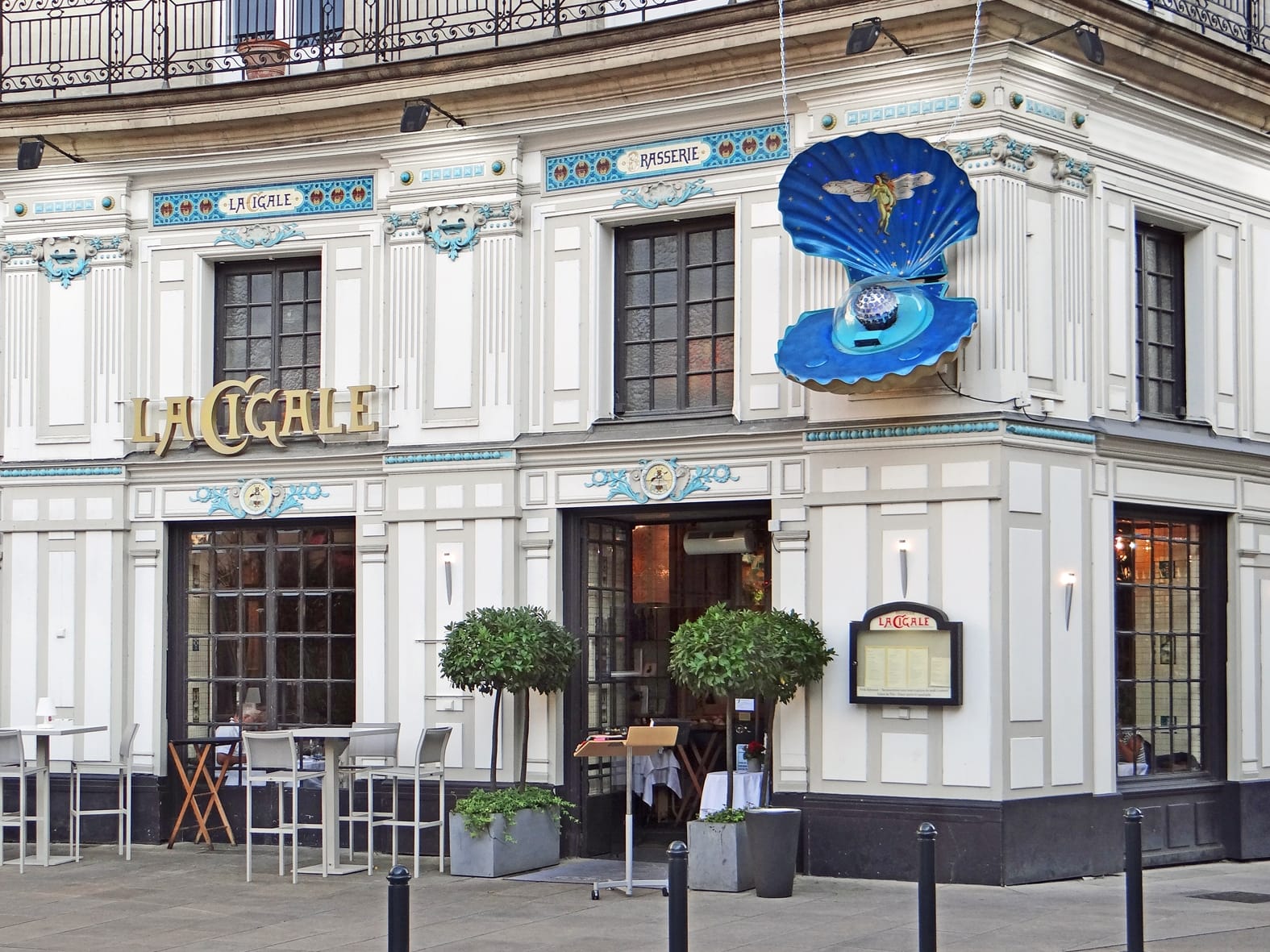
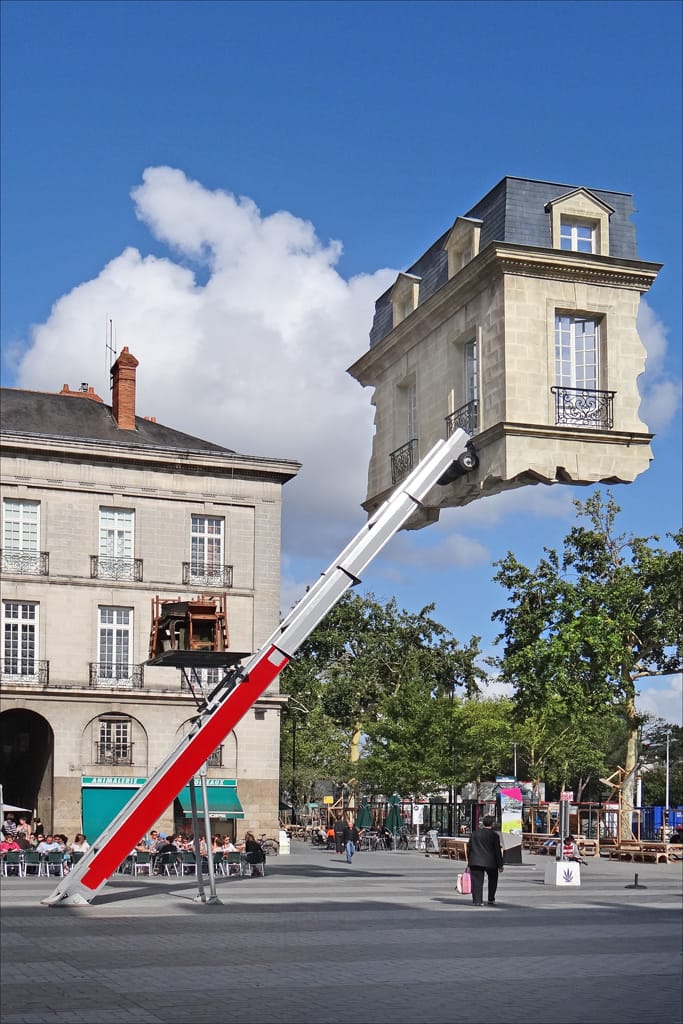
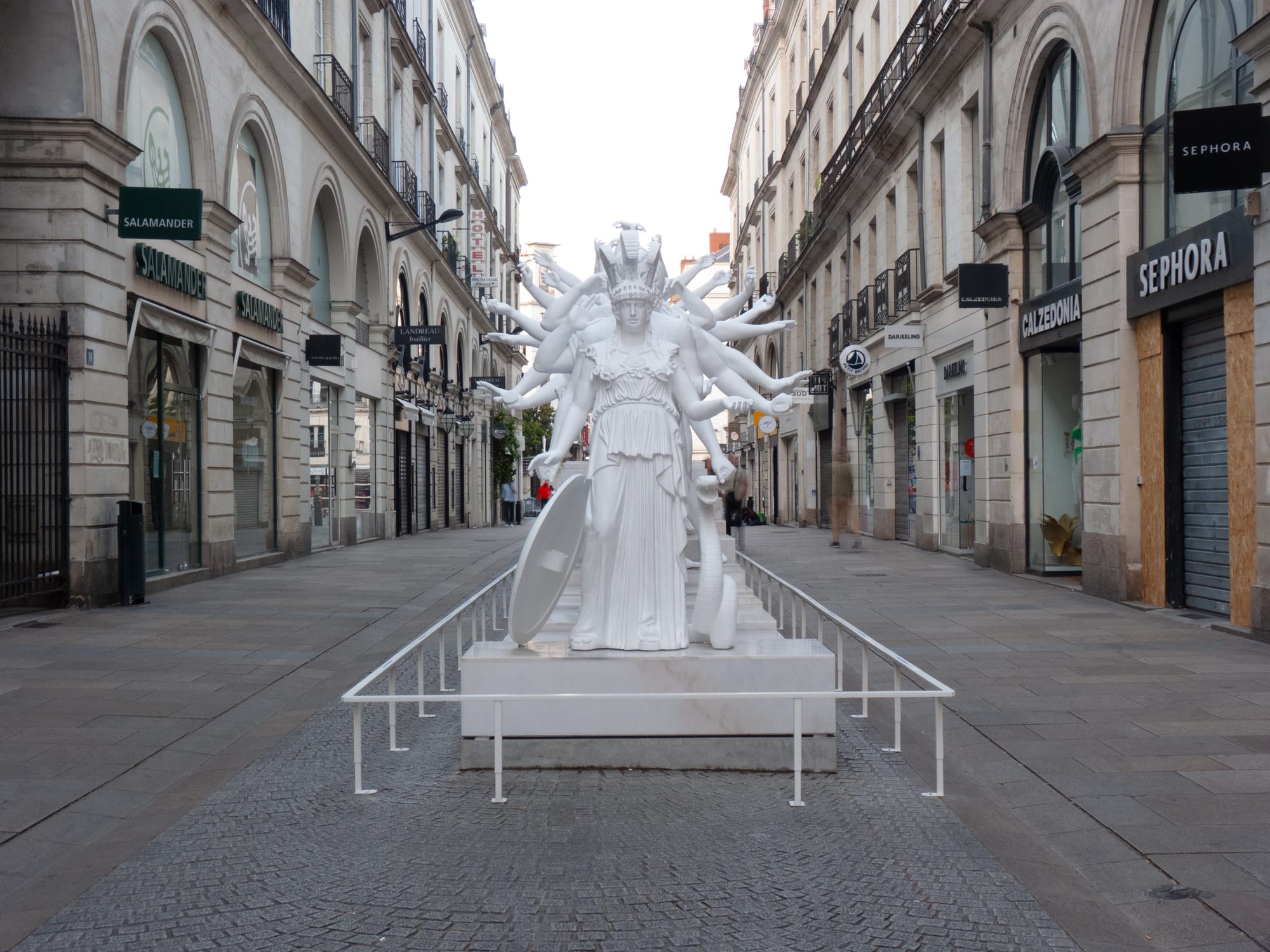
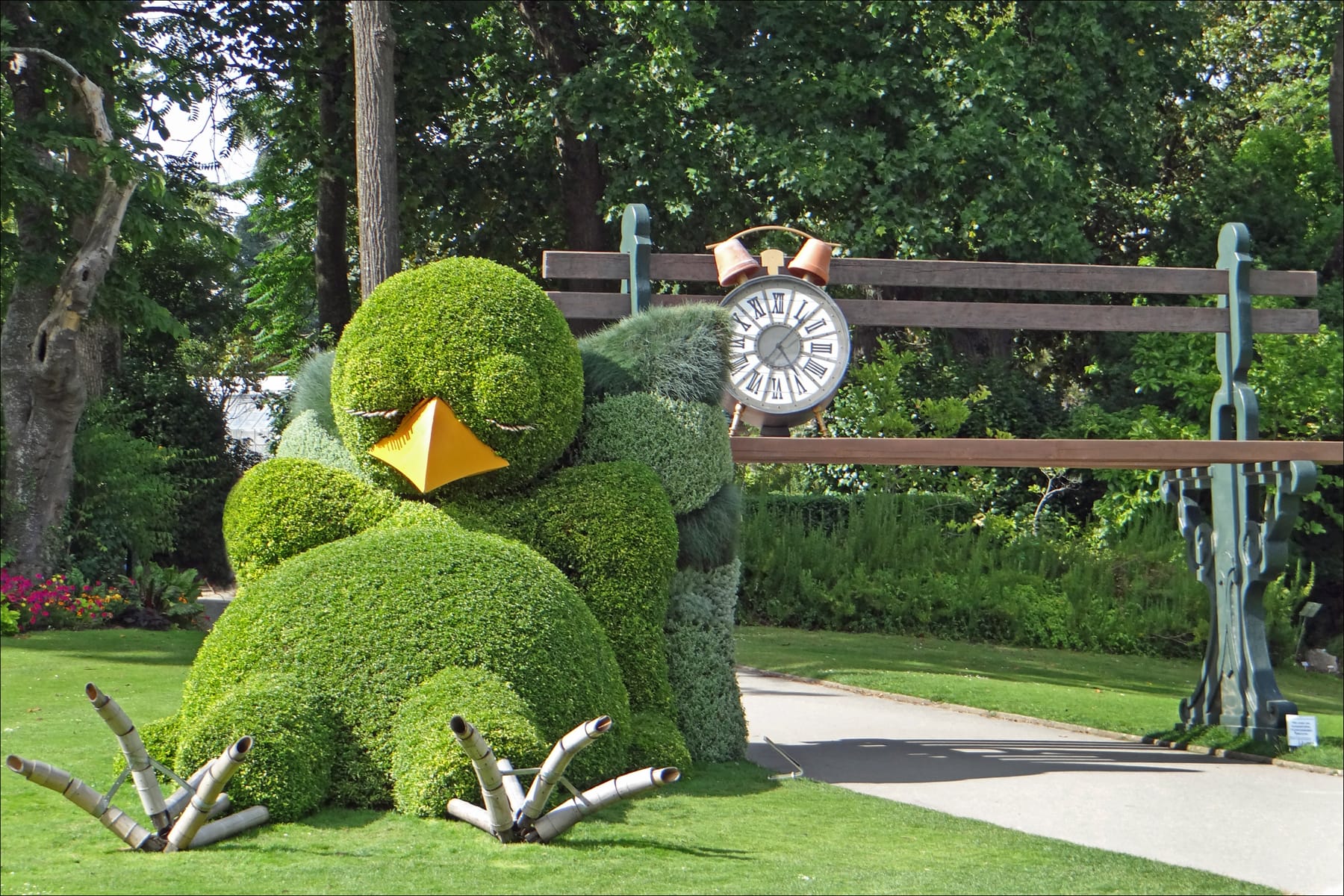
Sophie Lévy: That's really the mission Le Voyage à Nantes was created to fulfill. The idea was that cultural institutions matter, but they should be complemented by art that’s visible in the city — reaching a broader audience more directly. Starting in 2012, every summer the festival installs 10 to 20 monumental works throughout the city, some temporary, some designed from the start to be permanent. Over the years, that has built up into what we call the Green Line — a literal green line painted on the sidewalks that guides visitors from one work to the next. Some stops are heritage sites, like the castle or a historic church. Others are works commissioned by Le Voyage à Nantes. All of them are site-specific, made by living artists, created for Nantes rather than simply brought in.
The effect is almost surrealist — an element of surprise at every corner, art completely blended into the urban experience. What I often say is that Nantes didn’t have an Eiffel Tower, and that turned out to be its great advantage. Because there was no dominant symbol to work around, everything remained possible. Cities like Dijon have extraordinary medieval architecture, centuries of history — but that legacy leaves less room for invention and for new artists. When you have a great past, it's hard to get people interested in the present.
Nantes had a castle, but not the most impressive one along the Loire Valley. It had a Museum of Fine Arts, but an average one by French standards. It didn’t have a signature dish. Depending on who you asked, it was a sea city or a country city, a left city or a right city — sometimes considered religious, sometimes secular. Everything was true, and nothing was definitive. That floating identity, which once seemed like a weakness, turned out to be a canvas.
Cara Eckholm: What is the identity today, after 30 years of deliberately constructing one?
Sophie Lévy: The Ayrault era was really about repair. Nantes had accumulated a lot of trauma. In the 1920s, portions of the river running through the city were filled in — what had once been a city of waterways, almost like Venice, lost that character. Then in 1943, a large portion was destroyed by Allied bombing — perhaps half or two-thirds of the city. Then the economic crises. And there’s also the history of the slave trade: Nantes was one of the principal French ports for the Atlantic slave trade in the 18th century, and the fortune of Nantes was partly built on that. Ayrault decided that the past had to be confronted directly — that you could use all of it, not to forget but to turn yourself toward the present. He wanted to repair the scars without erasing them.
The current mayor, Johanna Rolland — who was born in 1979, making her one of the youngest major-city mayors in France — has shifted the frame. Her era is about preparation rather than repair: preparing Nantes for the ecological transition, for the present century. Her phrase is la ville du vivant et des imaginaires — the city of the living and of the imaginations.
And when you look at Nantes's cultural history, that surrealist thread is real. Jules Verne was from Nantes. Jacques Demy was from Nantes. The poet Julien Gracq was associated with the city. The great photographer Claude Cahun. There’s a long-running science fiction literature festival. There has always been this passion for imagination — for the power of the human mind to reinvent the world. In 2029, Nantes is opening a new museum called La Cité des Imaginaires — the City of the Imaginations — which will bring together the Jules Verne archives and explore the intersection of art and imaginative thinking.
Cara Eckholm: It’s funny that a mayor born in ‘79 is considered young — we have a 34-year-old mayor in New York. But I definitely saw the Surrealism when I was walking through the city. Can you explain what Le Voyage à Nantes actually is as an organization?
Sophie Lévy: It's a large and complex public entity — I’m still mapping it since I arrived, because it's many different things that were brought together. The Château des Ducs de Bretagne — the castle which is also a history museum — is managed by Le Voyage à Nantes. Les Machines de l'Île is managed by Le Voyage à Nantes. That’s the project you may have heard of: a theater company that decided to build enormous mechanical animals. The centerpiece is a giant elephant, made of steel, wood, and leather, that walks through the city and can carry riders inside it. Its trunk can spray water. There are also monkeys, an ant, and many others installations — all interactive, all extraordinary as both sculpture and engineering. They're based on the Île de Nantes, the island where shipbuilding once happened, which is itself one of the great urban renewal stories of the transformation.
Then there’s the city’s tourism office, which sits within Le Voyage à Nantes. And there’s the summer arts festival itself — the annual installation of new works across the city. We’ve also added a winter event, the Voyage en Hiver, in which artists are commissioned to animate the city during the Christmas season. That actually grew from a request by downtown shopkeepers, who had seen the summer programming drive foot traffic and asked us for something at Christmas to increase their seasonal draw. So it means they understand the impact, even if it’s hard to measure precisely.
Cara Eckholm: Let's talk about tourism. Nantes essentially had no leisure tourism industry before 2000. What do the numbers look like today?
Sophie Lévy: Overnight stays in the city grew by roughly 42% between 2012 and 2019. Then COVID interrupted that, and we’ve since recovered to 2019 levels. Business travel — what the French call tourisme d’affaires — has always existed in Nantes, but leisure tourism is recent. All of the programming has had a significant impact, not just on visitor numbers but on the city’s overall image abroad. The City now has approximately 3.5M overnight stays.
This year we launched an observatory of tourism to start measuring this more rigorously. Three legs: We’ll track attendance and visitor origins using mobile data; we've implemented a booking plugin across many metropolitan hotels so we can see trends in real time; and we’re establishing a partnership with one of the major banks to analyze credit card spending, which will let us understand how much day-trippers and overnight visitors actually spend.
Cara Eckholm: What does the budget of Le Voyage à Nantes look like, and what does the city see in return?
Sophie Lévy: The annual budget across all the elements I’ve described is around €36 million. Two-thirds come from public funding. One-third comes from earned revenue — primarily ticket sales from the castle, Les Machines and some cruise experiences we manage. But the economic impact extends well beyond what comes back to us directly. Hotels, restaurants, retail — that flows through the broader economy, not back to the organization. The fact that downtown merchants came to Le Voyage à Nantes asking for a winter event tells you they understand that the programming is driving their revenues, even when it’s hard to quantify.
Cara Eckholm: I did some back of the envelope math: Nantes spends roughly 6% of its municipal budget on culture — about €116 per resident, which is an extremely normal number in France, but an eye-watering number for cities in the US. American cities typically spend a tiny fraction of that per resident, rarely breaking 0.5% of the budget. In New York we spend roughly $36 per resident, which is considered incredibly generous, or 0.3% of the city budget. (It’s admittedly a bit hard to compare apples-to-apples as a percentage basis, as French municipal budgets don’t include education spending.)
I am wondering: what is the cultural money actually spent on, and how do you muster the political will to sustain a relatively high level of spending across different administrations?
Sophie Lévy: I don't have the detailed line-item breakdown, but the spending covers institutions — orchestras, an opera, three or four museums — as well as events like La Folle Journée, a week-long classical music festival, and the Festival des Bords de l'Erdre, an outdoor jazz festival. Cumulatively, that all adds up.
As for the political will: The city has seen enough evidence of the multiple returns — economic, social, and in terms of pure quality of life — to sustain the commitment across changes in administration. In France, at least from my experience, culture is understood as a powerful source of social cohesion. People's sense of attachment to a city, their desire to live there together, is inseparable from what they can experience culturally. That calculus is different from the American model, where the funding of the arts works in a completely different way.


