


What the MTA and NJ Transit can learn about rail from Japanese train systems
The Japanese railway system is the most extensive and efficient system of public transportation in the world. Over a quarter of all Japanese passenger-miles are traveled by train, compared to 8.1% in the UK and 0.3% in the United States. But while Japan is most famous for subways and Shinkansen bullet trains, the backbone of Japan’s rail system is the intricate urban commuter rail network, which carries passengers at a scale that American commuter rail systems could only dream of. On an average day in 2024, Shibuya Station on the Keio Inokashira Line — just one of many busy stations — carried 286,000 passengers to and from Tokyo’s western suburbs. In the summer of 2025, the entire Long Island Rail Road averaged about 265,000 passengers per day.
Last month, I spent 10 days in Japan, seeking to understand the country’s thriving commuter rail systems. There are three key things Japanese railways do better than their American counterparts. Japanese railways invest in labor-saving technology, they buy better trains and they make transit-oriented development an integral part of their financial stability. The MTA and New Jersey Transit should learn from these ideas. With both agencies facing fiscal shortfalls and lots of talk about how to generate more housing in and around New York, it has never been more urgent to learn how the most successful commuter railroads in the world do business.
Better technology
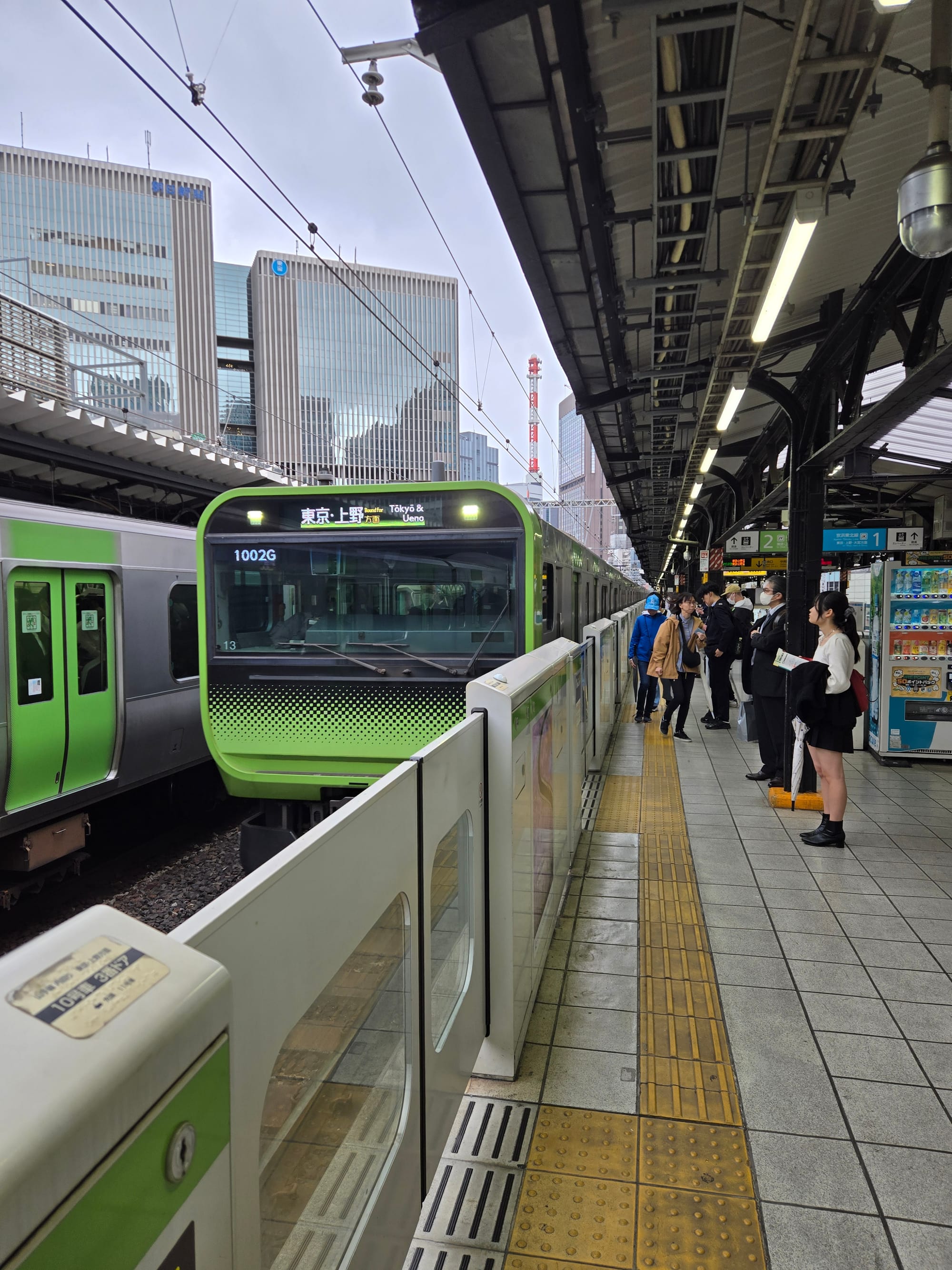
Japan faces dire labor shortages due to a shrinking population. Its working-age population peaked in 1995 and its total population peaked in 2008. Not coincidentally, the country’s commuter rail lines have gone all-in on automation. Some of these are large, flashy investments. The East Japan Railway Co. (JR East) operates the busiest commuter rail line in the world, Tokyo’s Yamanote Line, and is currently working to automate it. By 2035, the entire line will be driverless. For lines which still have street crossings, full automation is not possible with current technology, but even then, railways are installing equipment to reduce crew sizes. The Keio Inokashira Line, for example, is currently trialling automatic train control equipment to eliminate train conductors, enabling one-man operations.
Automation saves money and enables railroads to run more frequent trains. Even American examples bear this out. The BART regional rail system in San Francisco currently uses one-man operation, and it costs $374.50 to run a single train car for one hour in passenger service (in transit parlance, per “vehicle-revenue-hour”). This is less than half of what it costs the Long Island Rail Road ($850.81 per vehicle-revenue-hour), New Jersey Transit ($765.29 per vehicle-revenue-hour) and Metro-North ($836.37 per vehicle-revenue-hour).
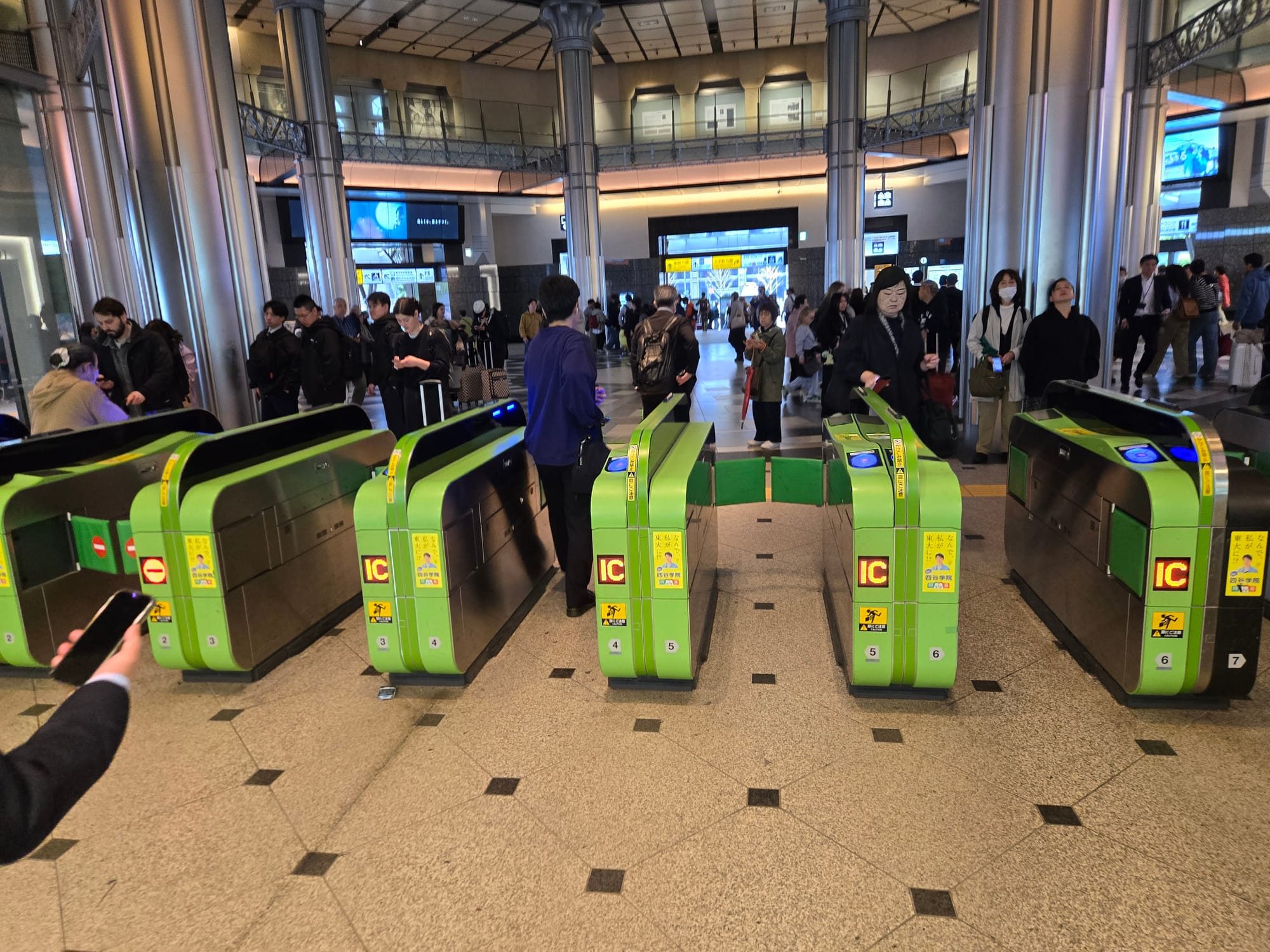
Japan’s commuter railroads don’t just use automation to operate the trains. They also invest in off-board technology to enable more efficient running. Japanese operators universally use turnstiles to collect fares, rather than the manual ticket takers used by the LIRR, Metro-North and NJ Transit (which also have machines supplementing their work). At major stations, Japanese operators have installed platform edge barriers which reduce delays in two ways: first, they prevent passengers from holding the doors; second, they keep passengers from falling onto the tracks.
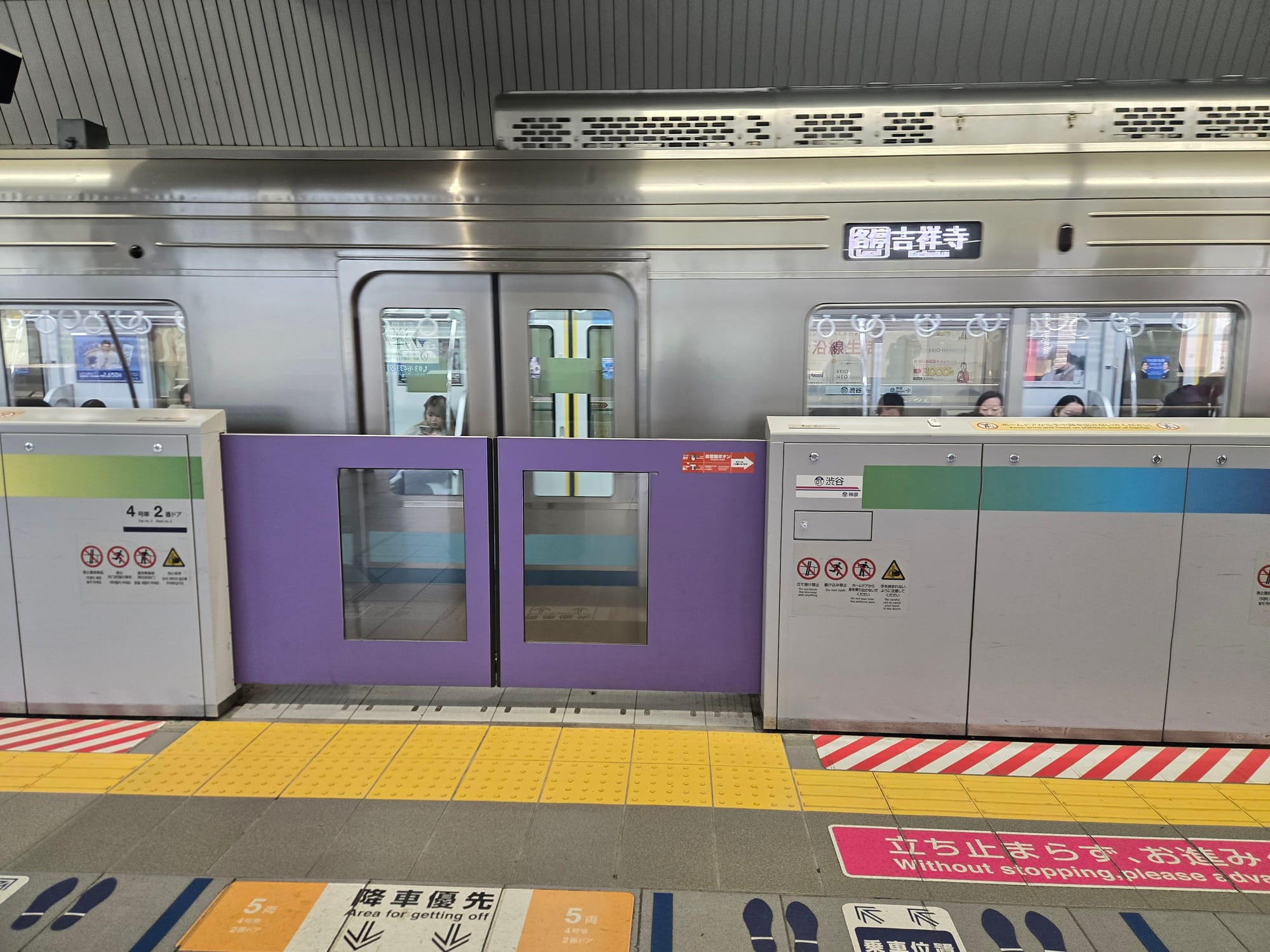
Japanese railroads have also invested in the simplest technology: platforms at the level of the train, so passengers don’t have to climb stairs to board, and the train crew don’t have to lower the stairs.
New York and New Jersey are far behind. Rather than reducing staffing requirements on trains, the New York State Legislature passed Bill S4091 last year banning one-man subway operation at the behest of the Transport Workers Union, but Governor Hochul vetoed the bill. Fare collection remains a labor-intensive, manual business. The Long Island Rail Road, for example, requires at least two workers per train to take tickets, a process that has been subverted by corrupt employees. To its credit, the MTA has installed level boarding platforms at Metro-North and LIRR stations, but New Jersey Transit still has dozens of stations which have not been upgraded. According to Nolan Hicks of NYU’s Transit Costs Project, level boarding saves about 30 seconds of boarding time per station. Over the course of a long run, such delays add up. For example, switching the dozen low-platform stations on NJ Transit’s Raritan Valley Line to level platforms would save an extra six minutes in each direction.
Better trains
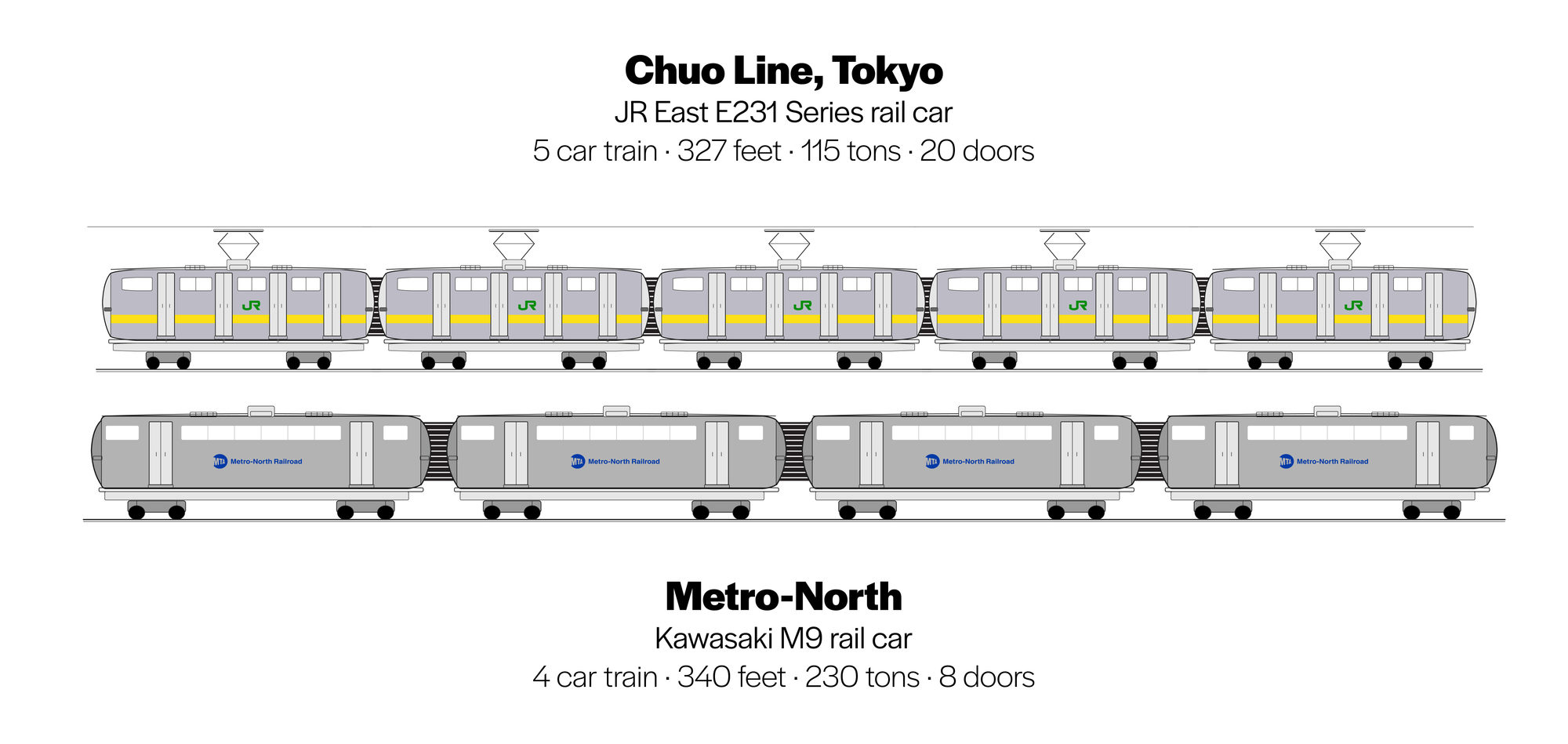
In Japan, it’s not just the surrounding technology that’s advanced. The trains themselves are much more fit for their purpose than their American equivalents. Compared to the rolling stock used in the Tri-State Area, Japanese trains are lighter, faster and have more doors so passengers can board more quickly. On the weight front, the MTA’s newly purchased M9 railcars, used by the LIRR and Metro-North, weigh 65 tons each. A four-car, 340-foot train weighs 230 tons. Comparable Japanese trains, like the E231 series used on Tokyo’s Chuo Line, weigh half as much. A five-car, 327-foot train of E231s weighs 115 tons. Weight matters because lighter train cars are faster, require less electricity and put less wear and tear on tracks.
The speed comparison becomes even more stark when comparing Japanese trains to the diesel locomotive-pulled trains still in common use in the Tri-State Area. According to Hicks, an eight-car train pulled by a diesel locomotive takes about 120 seconds to reach 80 mph from full stop. Japanese commuter trains can go 0-80 in 45 seconds, because each car has its own motors, electric motors give better torque and the trains themselves are lighter. The time savings are enormous. When the Caltrain system in San Francisco switched from diesel locomotives to lightweight electric trains, it cut travel times for a 50-mile trip — the distance from Grand Central to Cold Spring — by 24 minutes.
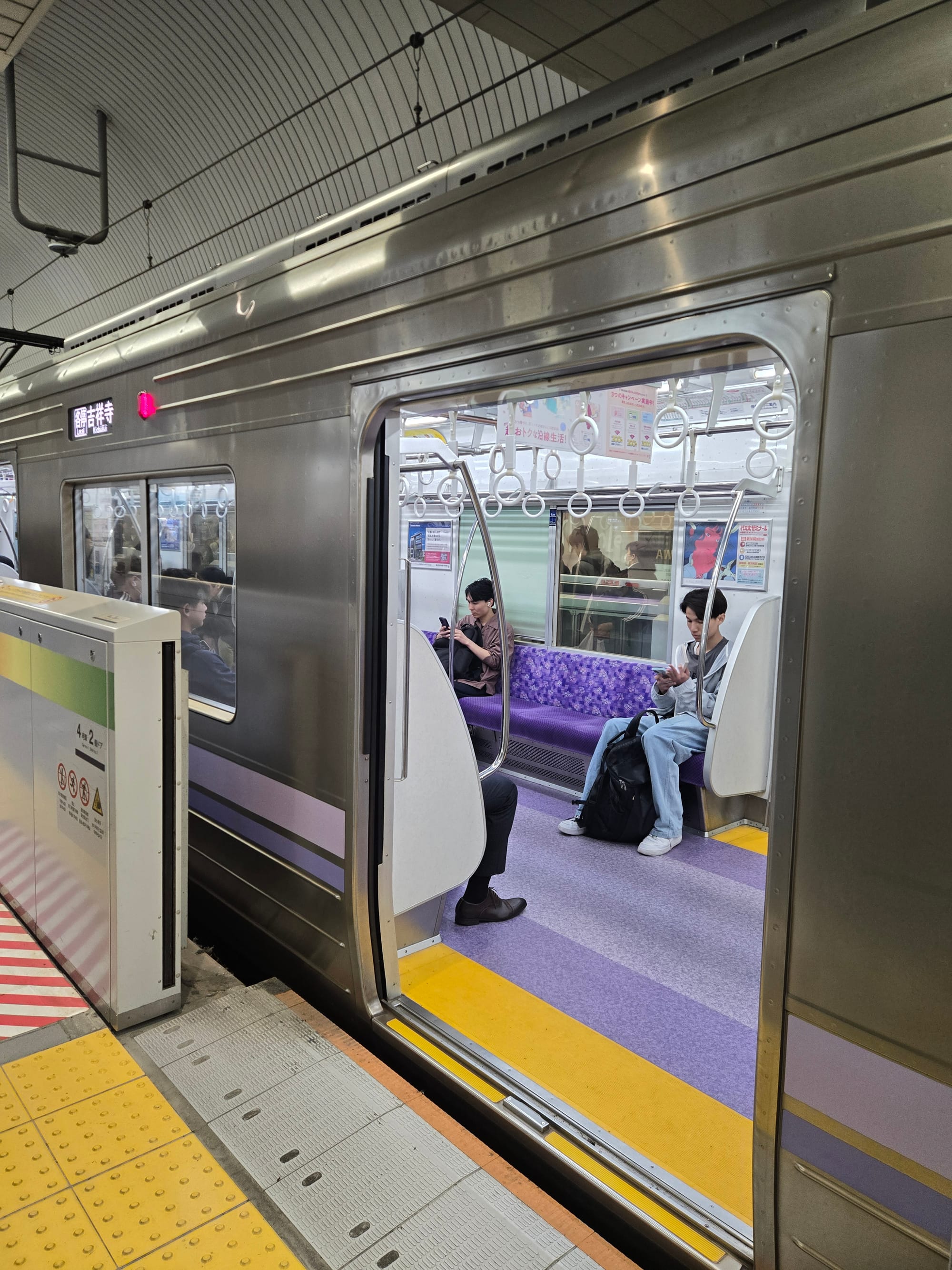
Finally, Japanese commuter trains take less time to load and unload passengers because they have more doors. Japan’s E231 Series, for example, has 20 doors for a five-car, 327-foot train; the MTA’s new M9s have only eight doors for a roughly equivalent four-car, 340-foot train. American train designs make it harder to load and unload passengers quickly, leading to train congestion at major hubs like Penn Station. BART in San Francisco faced similar issues with its fleet of 1970s train cars. When BART replaced its fleet in the late 2010s, the agency bought cars with more doors.
How does it add up? At Penn Station, the LIRR and NJ Transit respectively take 18 and 22 minutes to unload passengers, load new passengers and depart. In Tokyo, the Keio Inokashira Line takes three minutes, six seconds to do the same at its Shibuya terminal. Some of this inefficiency is because Penn Station has narrow platforms, and the LIRR and NJT do have outdated operating practices — but much of it is because it takes passengers longer to get on and off the train.
The Tri-State Area’s railroads have stuck with these outdated train designs, even though the Federal Railroad Administration legalized the use of lightweight Japanese-style rolling stock in 2018. It’s not just the MTA ordering heavy, outdated equipment, either. New Jersey Transit recently ordered more dual-level train cars that weigh an average of 75 tons per car. Per car, this is 10 tons heavier than the MTA’s M9, 30 tons heavier than the dual-level cars ordered by Caltrain and over 50 tons heavier than the E231 series used in Tokyo.
Transport and real estate development, hand in hand
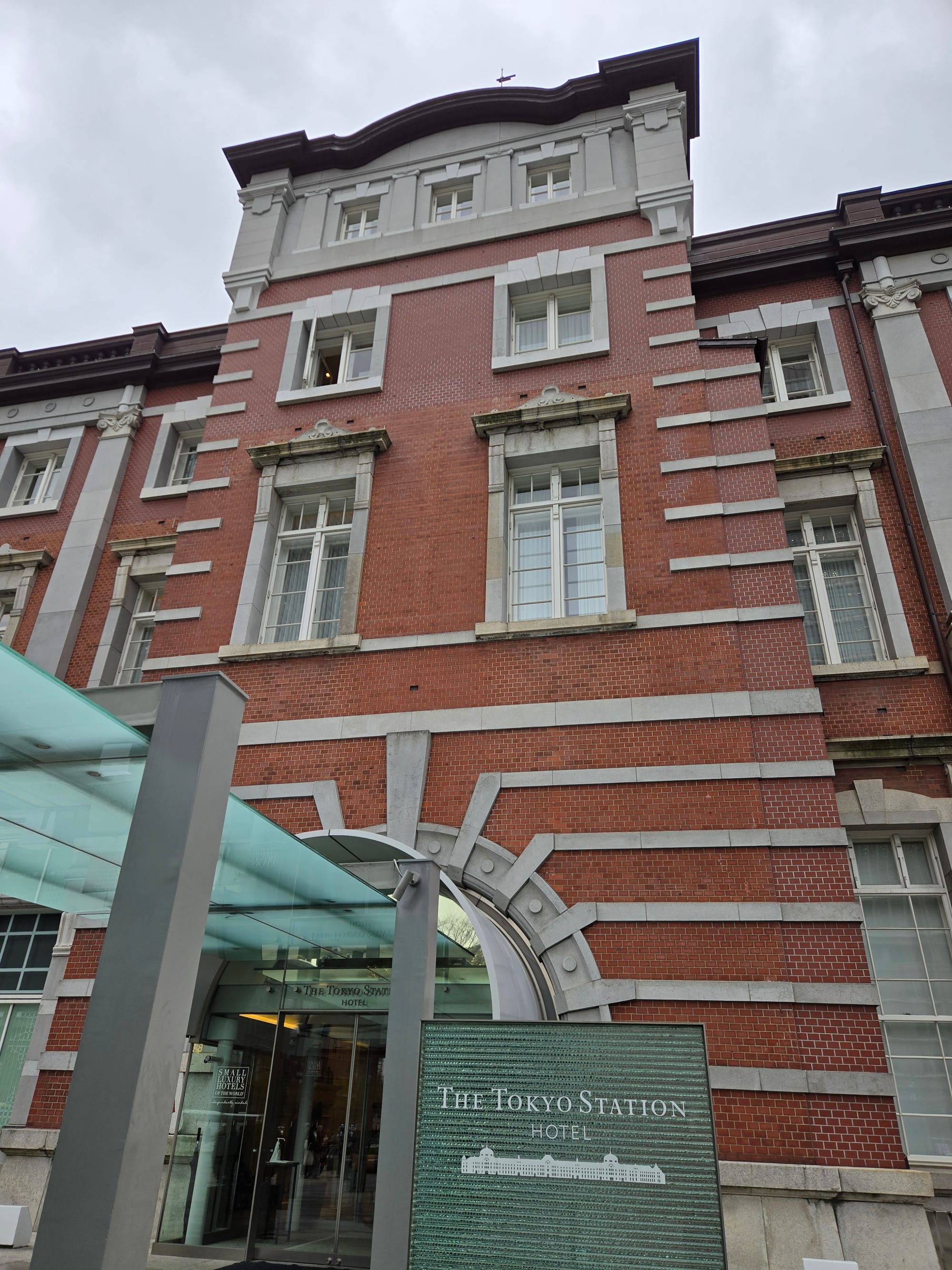
The MTA only covers a third of its operating expenses through fares, and NJ Transit recovers about half, but Japanese commuter rail operators don’t require public subsidies to balance the books. How is that possible? The Japanese make train stations destinations in and of themselves, not just places that passengers pass through. (Hong Kong’s publicly owned Mass Transit Railway does the same.) A showcase example is at Tokyo Station, Japan’s long-distance train hub. The grand old Tokyo Station Hotel, owned by JR East, occupies the station’s upper floors. But grand hotels aren’t the only part of Japanese railways’ real estate portfolios. They also build apartment buildings and commercial complexes. Each station is a small hub for people to work, live and play, even in the suburbs. The MTA and NJ Transit could do the same in New York City’s suburbs — if only it were legal to do so. In New York, Section 1266(8) of the Public Authorities Law makes the MTA subject to local zoning rules, and city councils can veto any development of “facilities that are devoted to purposes other than transportation or transit purposes.” NJ Transit is similarly dependent on local cooperation and lacks sufficient legal authority to carry out large-scale transit-supportive development on its property. A bill to give NJ Transit that authority was proposed in 2009, but failed. As of fiscal year 2024, less than 1% of NJ Transit’s operating revenue came from real estate. For comparison, the Keio Corporation (which runs Tokyo’s Inokashira Line) earned 18.3% of its revenue from real estate leasing and sales.
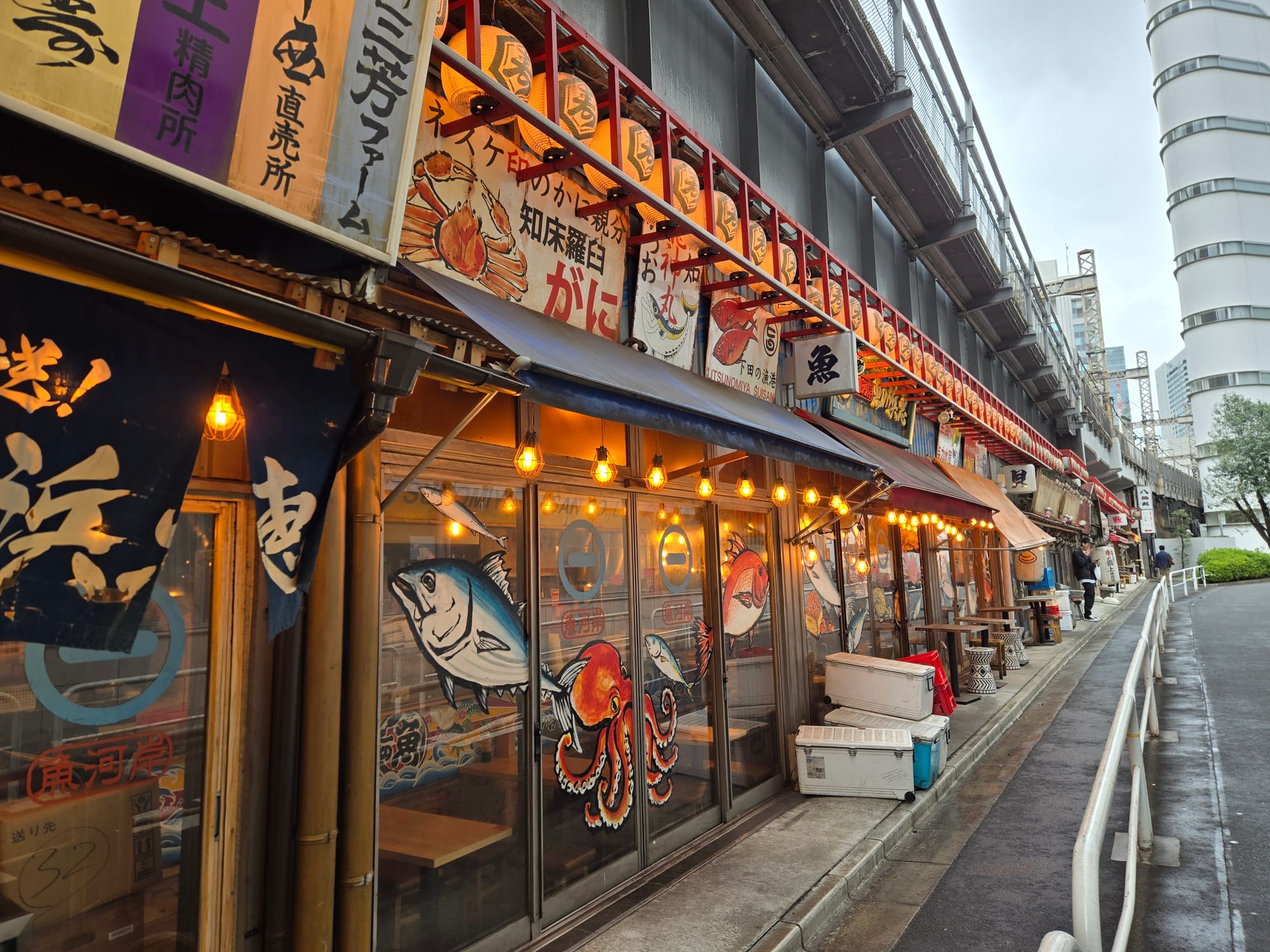
In addition to their larger-scale projects, Japanese railways undertake myriad small-scale building projects, including commercial developments beneath their elevated lines. Under-track development is both profitable and mitigates the urban blight caused by elevated railways, as retailers of all kinds line the under-track areas. Metro-North’s Park Avenue Viaduct in Harlem, the LIRR’s Atlantic Avenue Viaduct in Brooklyn and the disused Rockaway Beach Branch in Queens are all viable candidates for this type of transformation.
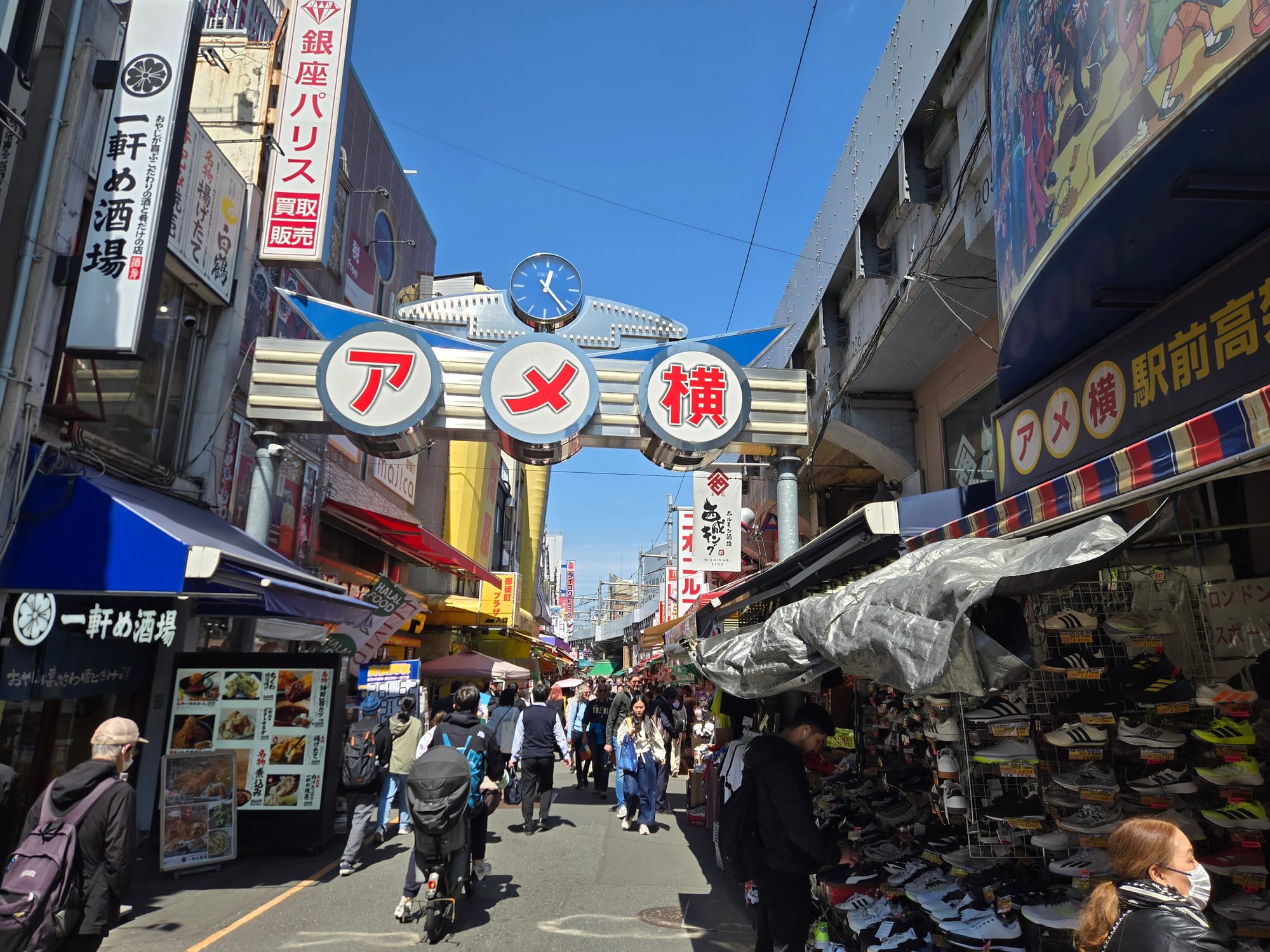
Legally restricted from developing their real estate portfolio, the MTA and NJ Transit have had to fall back on fare hikes, service cuts and state subsidies. Giving the MTA and NJ Transit general authority to develop real estate is an opportunity to steady both agencies’ finances, and it would be in line with a growing national trend. The Northern Illinois Transit Authority gained development authority last year, as part of a package of state reforms to stabilize greater Chicago’s public transport network. San Francisco’s BART received authority to develop on its properties in 2018. To date, BART has built over 4,000 homes, 672,000 square feet of offices and 202,000 square feet of retail. BART’s suburban El Cerrito Plaza development is illustrative of the possibilities. On what was once surface parking, 743 units of housing, a public library and 2,100 square feet of commercial space are planned or under construction. Closer to home, the Port Authority of New York and New Jersey has long been supported by its real estate portfolio. For the MTA and NJ Transit to do the same would take legislation in Albany and Trenton and an internal build-out, but it’s far from a pipe dream.
This combination of real estate and transportation used to be the norm in the United States, and it was how the commuter rail system was originally built. Grand Central Terminal was originally half real estate development, half transport expansion. As the New York Central Railroad wrote in 1912, “[Grand Central] is perhaps the largest, and promises to be the most successful, combination of the esthetic [sic] and the practical in city building yet planned in America ... Now, behind this artistic ideal of city building is a sane and hard-sense commercial proposition, for without some definite business side it would not be feasible.”
An opportunity in a crisis
The MTA and New Jersey Transit are facing slow-motion fiscal crises. The MTA’s long-term structural deficit is projected to reach $1.1 billion by 2029, according to the Citizens Budget Commission, while New Jersey Transit’s structural deficit is currently around $200 million. Rather than making brute-force cuts and raising fares, the commuter rail agencies should first think creatively about ways to improve the efficiency of their systems. There are plenty of ideas that can be borrowed from the Japanese commuter rail playbook. These can be simple cost-savers like new turnstiles and high platforms, or they could be longer-term plays like automation and real estate development. But the MTA and NJT needn’t come up with these ideas from first principles. Japan has already solved the problem of commuter rail sustainability, and it behooves the Tri-State Area’s transit agencies to learn from their ways.


