

Detail and craft make cities better.
By definition, “ornaments” have no functional or structural purpose. Buildings can stand safely without statuary or fluted columns or gargoyles. But this is not to say these architectural details serve no purpose at all: Ornaments exist to be beautiful or interesting.
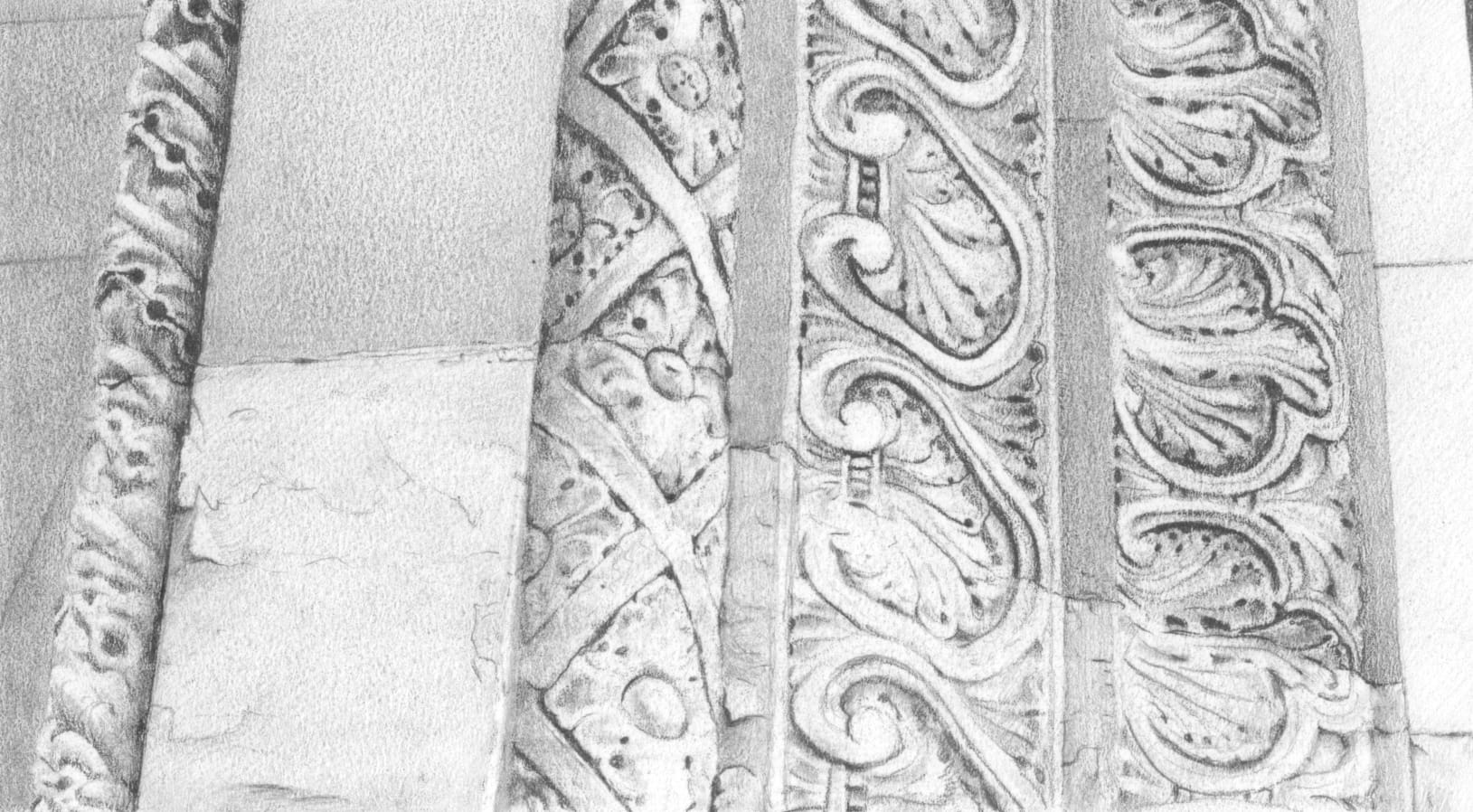
Though structural integrity is paramount, this aesthetic purpose should not be undervalued. Aesthetics are practical if not strictly necessary. For example, ornaments help buildings age gracefully — there’s an example of this at the southeast corner of Washington Square Park, on an NYU building with an ornate arch around its entrance. The bottom half of the arch was renovated, and because soot and dirt have yet to settle into the pits and grooves of its pattern, we can see a stark seam between old and new. The old half is stained with the patina of time, giving the design better contrast that makes it both easier to see and lovelier to behold.
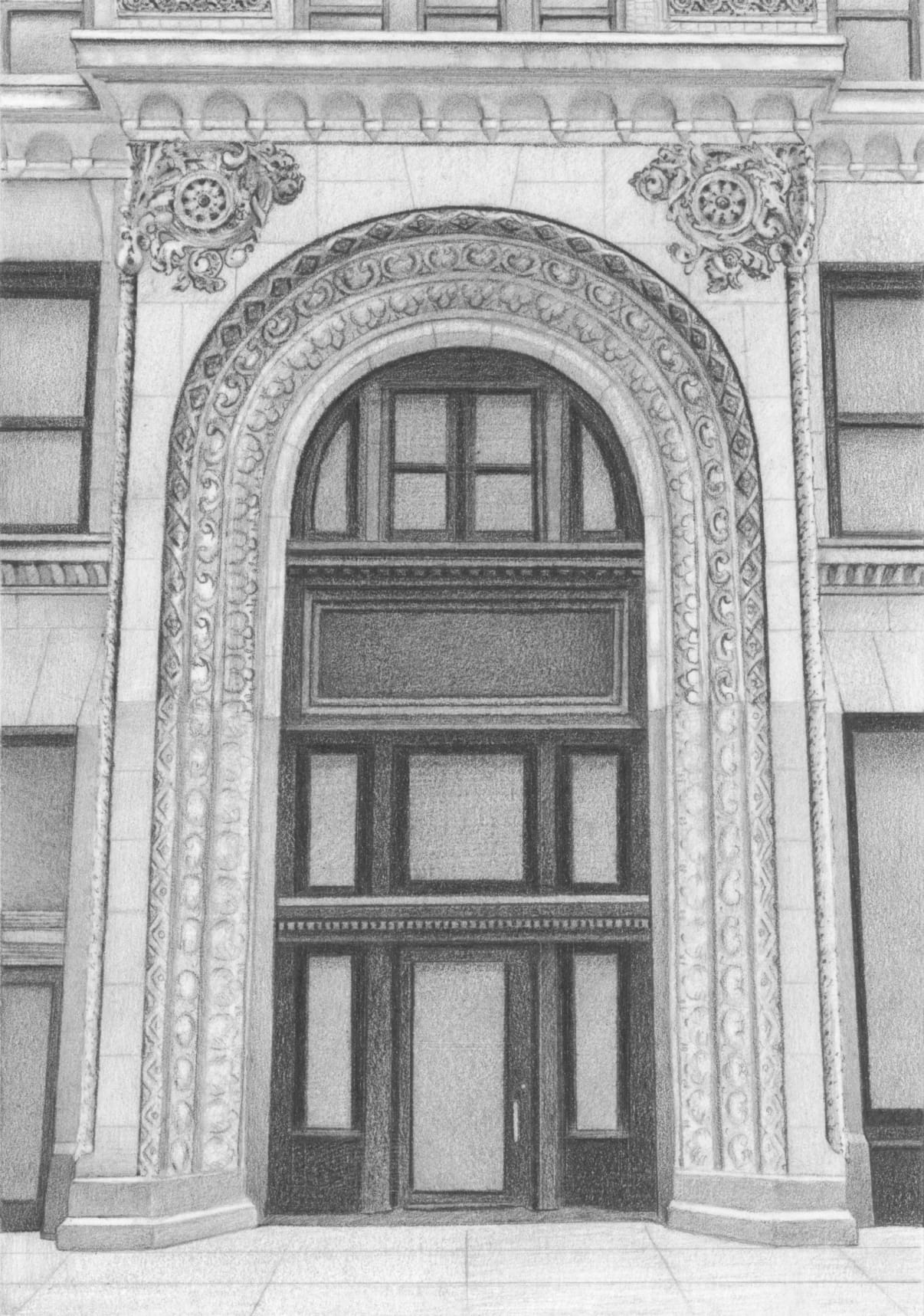
Ornamental architecture looks better with age, while buildings with smooth façades often seem in need of a pressure wash. Even in extreme decay, ornamental architecture becomes a romantic ruin, whereas unadorned buildings tend to look blighted.
But the greatest purpose of ornament is more fundamental than a list of practical benefits: Ornaments are part of the human condition.
People have been decorating their walls for tens of thousands of years, at least since the cave paintings in Chauvet and El Castillo. Ornamentation is so ancient and persistent across all human cultures that I suspect we have evolved to adore it. How else could it be so universal? Ornaments give our eyes a place to explore, our minds a subject to contemplate. We marvel at the craft and attention to detail necessary to design complex patterns and the craftsmanship required to execute them — at human talent.
Humans have spent centuries heavily ornamenting our most sacred buildings, like the twin-spired Gothic cathedral in Cologne that took 632 years to build. Last winter, the final piece of the central tower in Antoni Gaudí’s Sagrada Família was finished after 144 years, and completing all of its ornaments will take almost another decade. The characteristics that make ornaments high quality — excellent craftsmanship, rich materials, intricacy of design — subtly (and sometimes not-so-subtly) communicate that a building is precious.
We love ornamental architecture so much that people have risked their lives for it, like the firefighters who saved Notre Dame. Others have died for it, like photographer Richard Nickel, who documented and preserved the architecture of Louis Sullivan, the “father of skyscrapers” and mentor to Frank Lloyd Wright. In 1972, while Nickel was salvaging pieces of Sullivan’s Chicago Stock Exchange, the partially demolished building collapsed on top of him.
Ornamental architecture became unfashionable thanks to Modern architects like Adolf Loos, who wrote in 1908 that ornament is a crime because he believed that unadorned surfaces were timeless, with no ornaments to go out of style. Modern architecture was also meant to be place-less, which is why the Museum of Modern Art christened it the International Style in its first architectural exhibition in 1932. MoMA identified how “plain, unadorned architecture of rectilinear forms built of steel, reinforced concrete, and glass ... transformed the skylines of many major cities around the world.”
Modernists championed functionalism instead, but even they succumbed to the siren song of ornamentation. Le Corbusier, an acolyte of Loos who is widely considered the father of Modern architecture, helped design the first glass curtain wall skyscraper in New York — the UN Secretariat Building on the East River. Its east and west faces are glass sheets held in steel frames, while its narrower north and south sides are clad in Vermont marble, which gives the tower a touch of opulence. Le Corbusier also painted parts of his concrete city in Chandigarh, India, in bright, rainbow patterns. Yet his idiosyncratic color theory is no more functional than Renaissance frescoes or the painted beasts stampeding across the Chauvet cave walls.
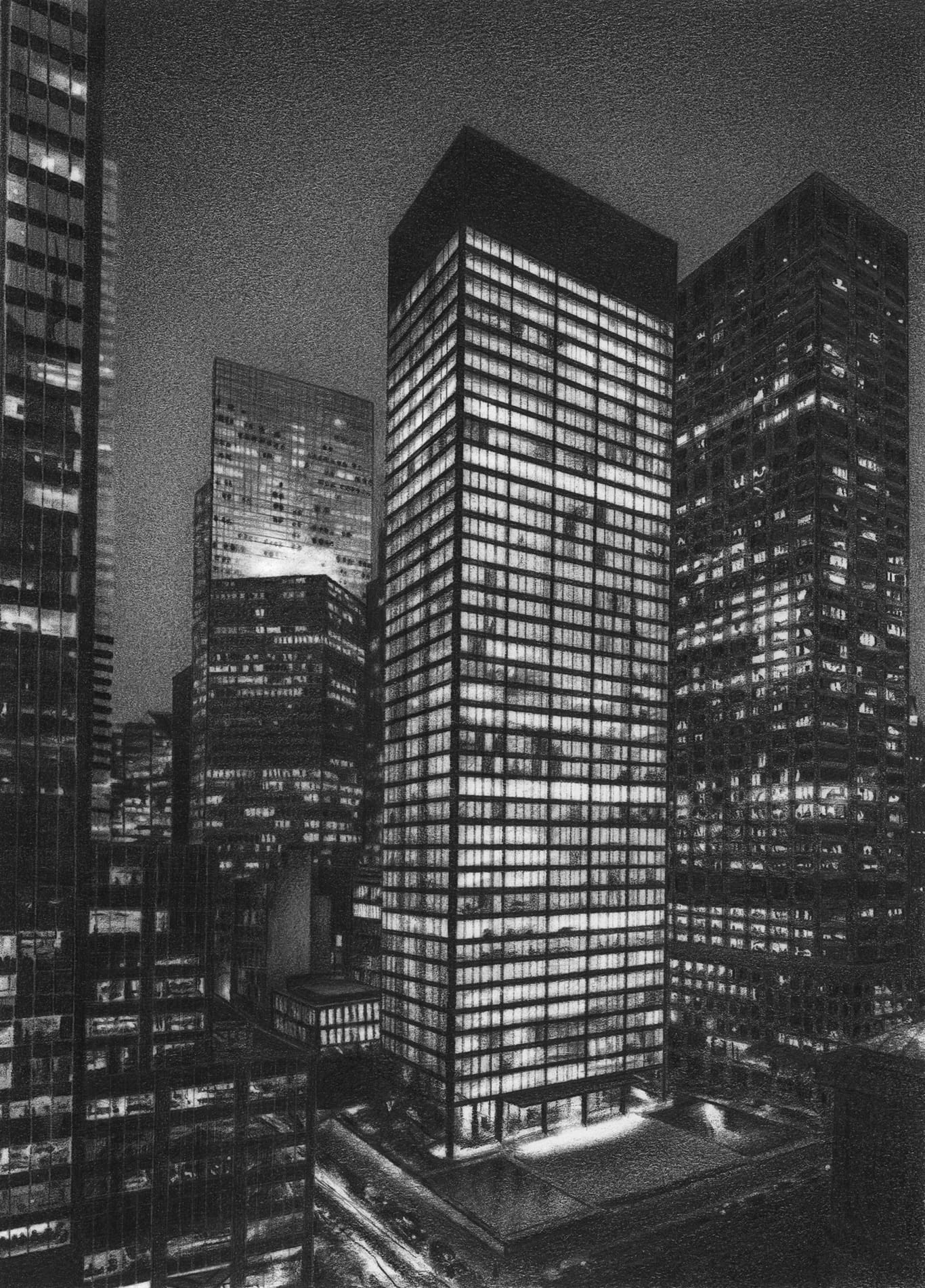
Similarly, in Tom Wolfe’s 1981 broadside “Bauhaus to Our House,” he mocked modern architect Ludwig Mies van der Rohe for his work on the Seagram building, a Modernist icon in Midtown: “American codes required that structural steel members be encased in concrete or some other fireproof material. … What [Mies] did was enclose the steel members in concrete, as required, and then reveal them, express them, by sticking vertical wide-flange beams on the outside of the concrete, as if to say: ‘Look! Here's what's inside.’ But sticking things on the outside of buildings ... Wasn't that exactly what was known, in another era, as applied decoration? Was there any way you could call such a thing functional?”
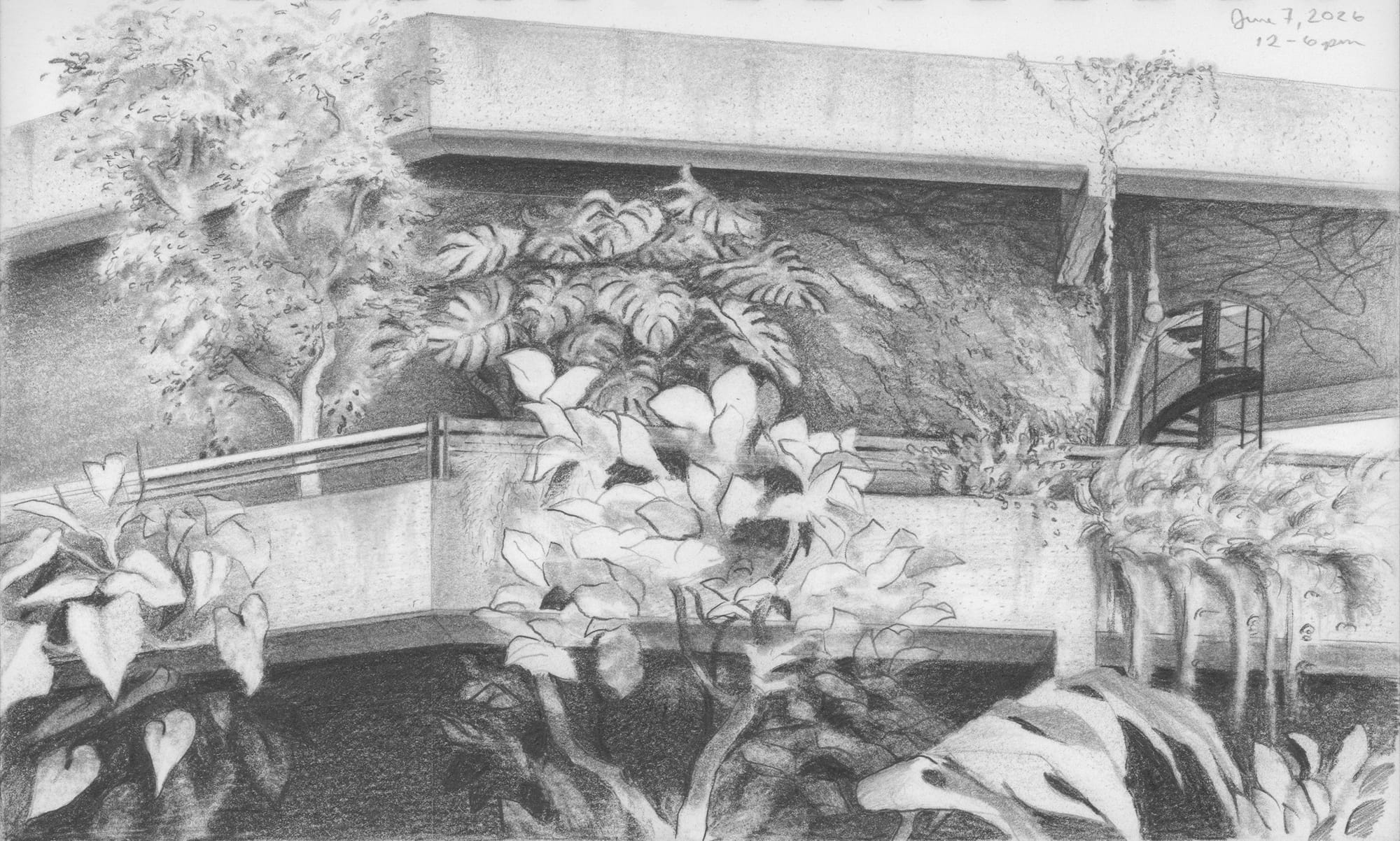
Or consider the Barbican Estate in London, the crown jewel of Brutalism, a Modern style dominated by the use of raw concrete. Completed in 1976, the Barbican mixes dense residential flats with an arts center, school facilities, and a conservatory garden. On a recent trip, my architecture tour guide emphasized that, contrary to the anti-ornamental ideals that birthed the style in 1950s London, the Barbican includes many ornamental flourishes.
Most conspicuously, the Barbican is full of plants: Extensive landscaping features fountains with water dyed green, balcony gardens overflowing with red geraniums and the conservatory overgrown with a tropical collection. At the Barbican, foliage becomes architectural ornament.
But there’s ornament carved into the buildings, too. Dramatically, it took 11 years for a select group of craftsmen to jackhammer textural effects into the concrete, after which many permanently lost feeling in their fingertips and developed lung disease from inhaling dust. The architectural ornaments at the Barbican Estate have demanded care and sacrifice for decades.
So, upon closer inspection, even the most austere architectural styles are decorated with intense devotion. Given this reality, the question is not whether we should have ornamental architecture, but what kind. The idea that humanity could end its millennia-long love affair with ornamental architecture was always absurd. It is in our nature.
But ornament — however much it has been discretely smuggled into austere buildings — has yet to make a strong comeback since Modernism took hold. Contemporary buildings may come in novel shapes, but most of their surfaces are plain. There is substantially less complexity in the slick glass “neo-Art Deco” Brooklyn Tower, built in 2022 as the tallest skyscraper in the outer boroughs, than in any Art Deco building from the 1930s. The interior of Moynihan Train Hall in Midtown, renovated in 2021, is streamlined, while its historic exterior is detailed. Even the new wing of the American Museum of Natural History on the Upper West Side, completed in 2023 as a place for childhood wonder, resembles a polished cave wall grafted incongruously to the side of the elaborate Victorian Gothic original.
When ornamental buildings are torn down, they’re almost certainly replaced with something unadorned. Perhaps the most egregious example in the city’s history is the demolition of the old Penn Station, to be supplanted by the eyesore that is Madison Square Garden. Because we build so little new ornamental architecture, when we don’t maintain and preserve the historic buildings, ornaments slowly disappear from the city. That is why, if you want to live somewhere beautiful in New York, you probably look for a prewar building. You trade the newest amenities for cornices and crown molding.
This makes it all the more a shame that the ornamental arch at the corner of Washington Square Park was renovated badly. Close up, you can see that the new half is made from an inferior concrete. It has a rougher, flaky texture, and is colored a cool gray that appears deadened compared to the warmer cream of the original stone. Even once the patina of time settles into the recesses of the renovated pattern, it’ll never match the rest of the building. That inconsistency will always look like a patch, drawing attention to imperfections and making the archway appear shoddier than if the rough concrete seemed like an intentional design choice, rather than a regrettable byproduct of repair work. The ornament is the same design, but the craftsmanship suffers.
Ornamentation is not a virtue in and of itself. It should go hand in hand with craftsmanship: a trained precision, with not just attention but devotion to detail, that is a commitment to quality and beauty. In Modern architecture, craftsmanship is sometimes how simplicity is beautified, as when my Barbican Estate tour guide explained that the men who lost feeling in their fingertips from jackhammering a rough texture into the concrete were “select craftsmen” whose labors lasted 11 years. Their expertise, effort and suffering imbue the texture with a kind of intellectual beauty: Whereas before our eyes might linger on the texture but briefly, knowledge of how it was made holds our attention by giving us an interesting story to consider, and encouraging us to look closer at the blue granite embedded in the concrete that the texture exposes.
Obvious ornaments show off craftsmanship that need not be explained to be appreciated. Tour guides have much to say about ornamental architecture, too, but you don’t need one to help you find the beauty in the first place. When people look at architectural gems in New York like the newly restored Flatiron Building or Waldorf Astoria, it is self-evident they were built and rejuvenated by select craftsmen.
Historic preservation of masterpieces is good but insufficient. We also need new ornamental architecture. New York has always been a city animated by ambition and innovation; this is not the kind of place that should feel like a museum, as does much of Europe. The hallmark of New York architecture — the skyscraper — was born out of dynamism and technological progress, as the invention of elevators and steel skeleton frames led to an entirely new type of architecture. New York would be unrecognizable without these innovations.
There are New Yorkers intent on harnessing new technology to advance more detailed, ornamental architecture today, like Monumental Labs in Brooklyn, where artists, fabricators and carvers are using robotics and AI “to revive the ancient craft of stone carving, to bring sculpture and ornament back to our built environment on a mass scale, and to build cities of unmatched splendor using the world’s greenest construction material.” Each piece is hand-finished by artists whose traditional craft is being preserved by technology driving down the cost of sculpting stone. Along with preserving historic buildings, New York could have new ornaments to delight us with fresh expressions of human talent and ingenuity.
We must make pivotal choices: Ornaments hold meaning, demanding decisions about what to communicate and what should be taken from history. Some motifs have ancient lineages, like the acanthus leaf, which has recurred in Greco-Roman, European and Islamic designs since the ancient Greeks began using them in their scrollwork and column capitals. Acanthus leaves are plentiful on New York’s Beaux-Arts landmarks like Grand Central Terminal, the Public Library Main Branch, the Metropolitan Museum and many brownstones. My favorite example of an ornament sampling history in New York is the inlaid wood veneer on the Chrysler Building elevator doors, which have designs found in the tomb of Tutankhamun.
And we should steal from Modernism, too. We can consider whether our botanical motifs should be sculpted or grown out of stone, and there’s no reason why we can’t keep the sweeping views afforded by the glass sheet walls of our tallest skyscrapers, while adding ornaments that break up the boring monotony of a flat expanse. Modernism does not need to be disavowed; it needs to evolve.
The minimalism of Modernism is inherently limiting, because there’s only so much you can pare down, only so much you can strip off a naked building. At some point you run out of things to take away, with few available combinations to make out of what’s left. The more you subtract, the less complexity is possible — the very complexity that delights people when they look at ornament, because we tend to admire intricate parts coming together to form a cohesive whole. And complexity, in turn, makes variety possible. With enough complexity — with enough potential combinations of visual elements — is there any limit to the number of new aesthetics we might create?
The goal, contra Adolf Loos, is not to invent a timeless style, for there is no such thing as an aesthetic unmoored from its age and divorced from history. Modern architecture is an aesthetic as distinct as any other. It defined the “look” and sensibility of much of the 20th century, just as every previous aesthetic shaped its era. It is no more timeless than any of the ornamental styles it supplanted.
Rather, the goal should be to invent aesthetics to define our age. Architectural styles remind us of past generations, as we walk under the archways they built and turn the same doorknobs centuries later. We can scarcely imagine historical events without the aesthetics that defined their time — try to picture New York during the Jazz Age without seeing Art Deco.
Ornament is often conflated with historic pastiche, but the problem is, most contemporary architecture just looks like a pastiche of the plain surfaces popularized by 20th century Modernism. And unless we wish to remain derivative of the last century for much longer, we should draw more inspiration from the millennia of ornamental styles that preceded it. The list of influences visible in Art Deco, for example, seems endless: Greco-Roman, Gothic, Byzantine, Mayan, Egyptian, Chinese, Social Realism, the hubcaps and hood ornaments of Chrysler automobiles … all blended together in unprecedented ways. Though these influences are clearly apparent, Art Deco emerged out of them as a distinct aesthetic all its own. It was the last new style of ornamental architecture before unadorned glass towers and naked, concrete angles became the dominant trend.
How do we want our descendants to remember us when they walk through the archways we build today? In 100 years, will the aesthetics we invent loom as large in their imaginations as Art Deco does in ours? Do we believe that 21st-century New York can look as iconic as 20th-century New York?


